PRS#1
Home Page
Project Outcome: Dismembering Echoes [music performance]
APR 2019
PRS ASIA
![]()
![]()
![]()
![]()
![]()
![]()
![]()
![]()
![]()
![]()
![]()
![]()
![]()
![]()
APR 2019
PRS ASIA
︎






Project#1
DISMEMBERING ECHOES
Concept Finding: Listening
The first project started at the beginning of the PRS ASIA was Dismembering Echoes-2019.
It was a transitional project. The transition is evidenced by transitioning the themes of metal music genres into a gallery space [Galerie Quynh, District 1 Saigon Vietnam].
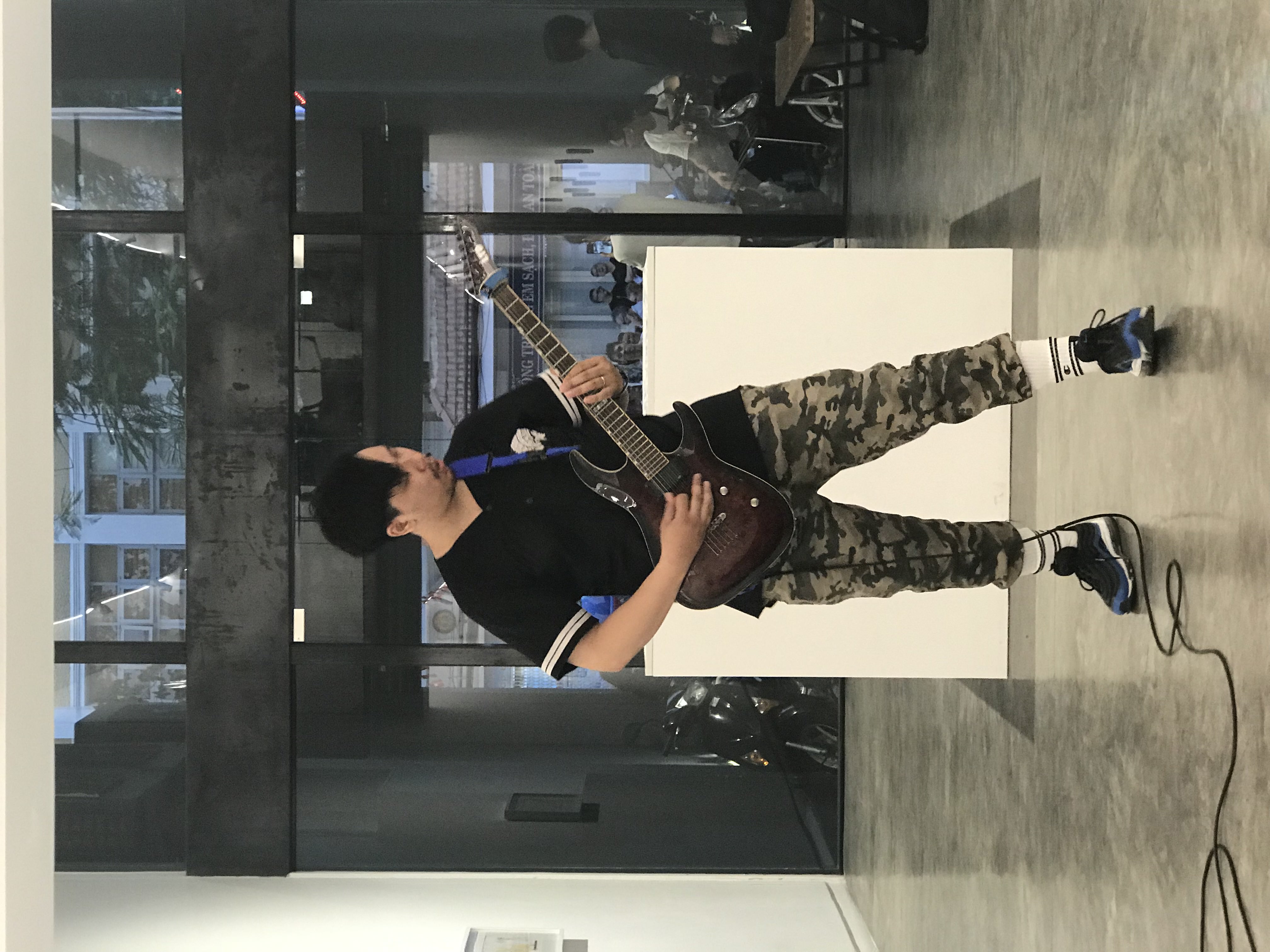
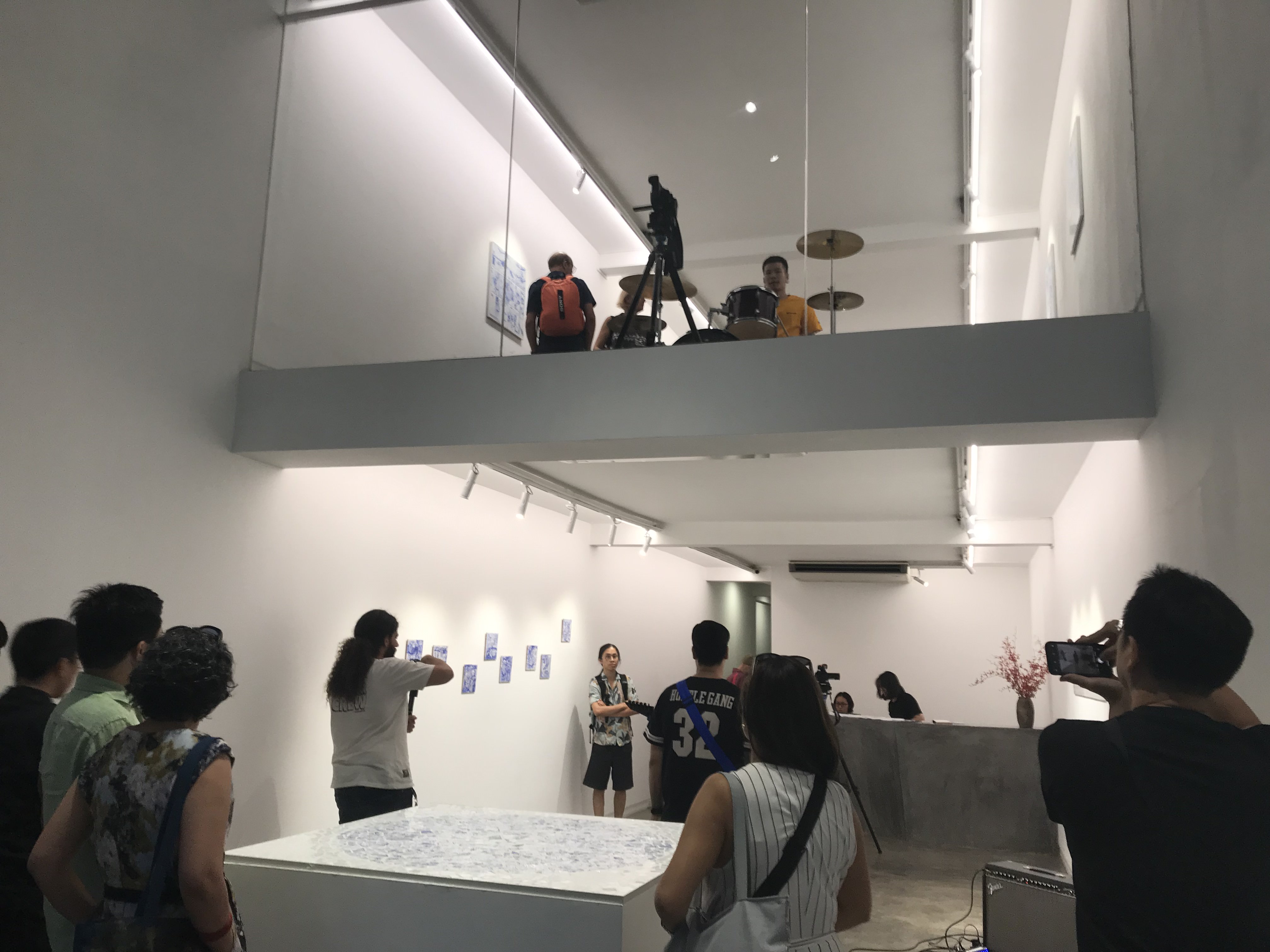
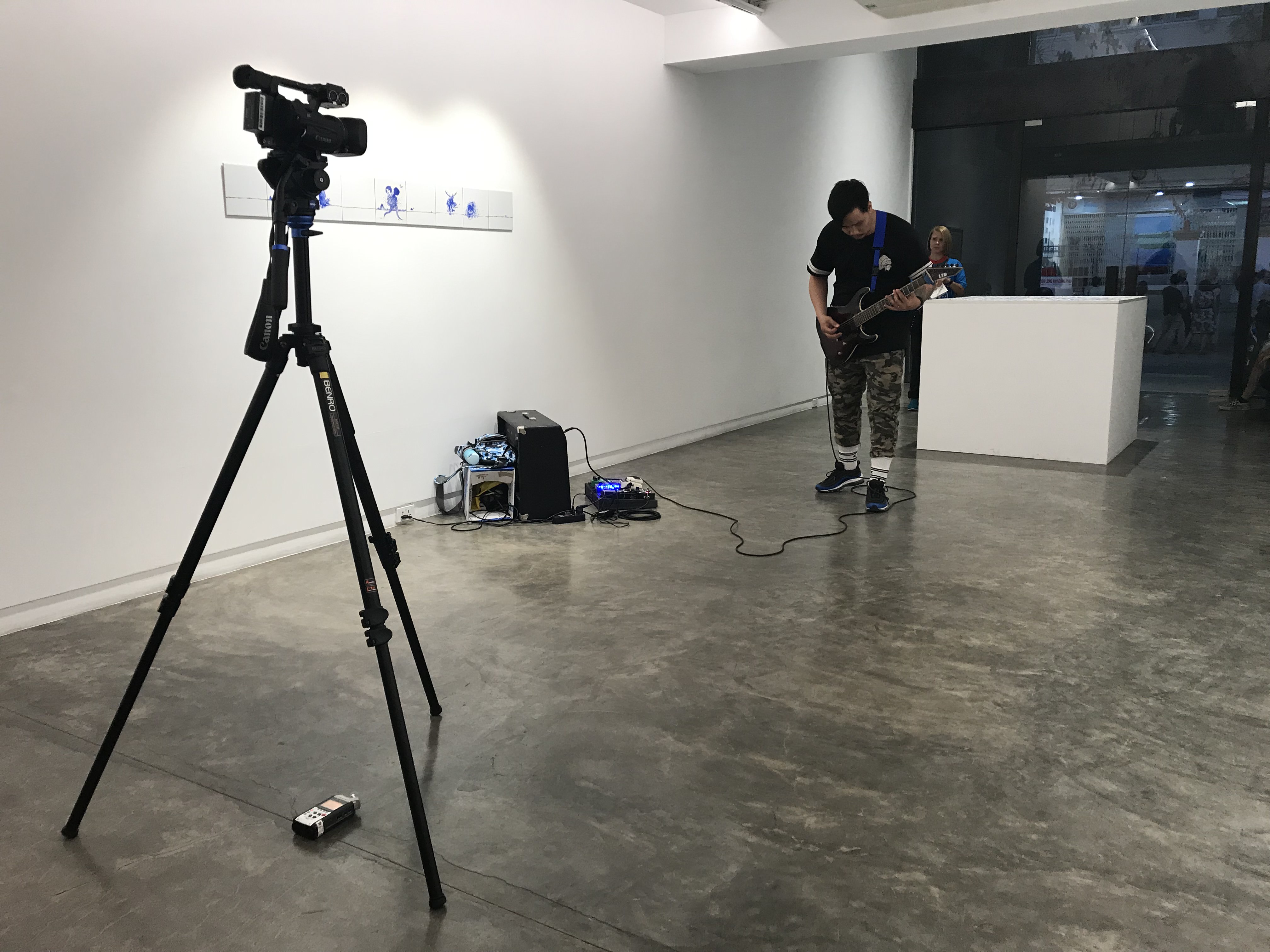
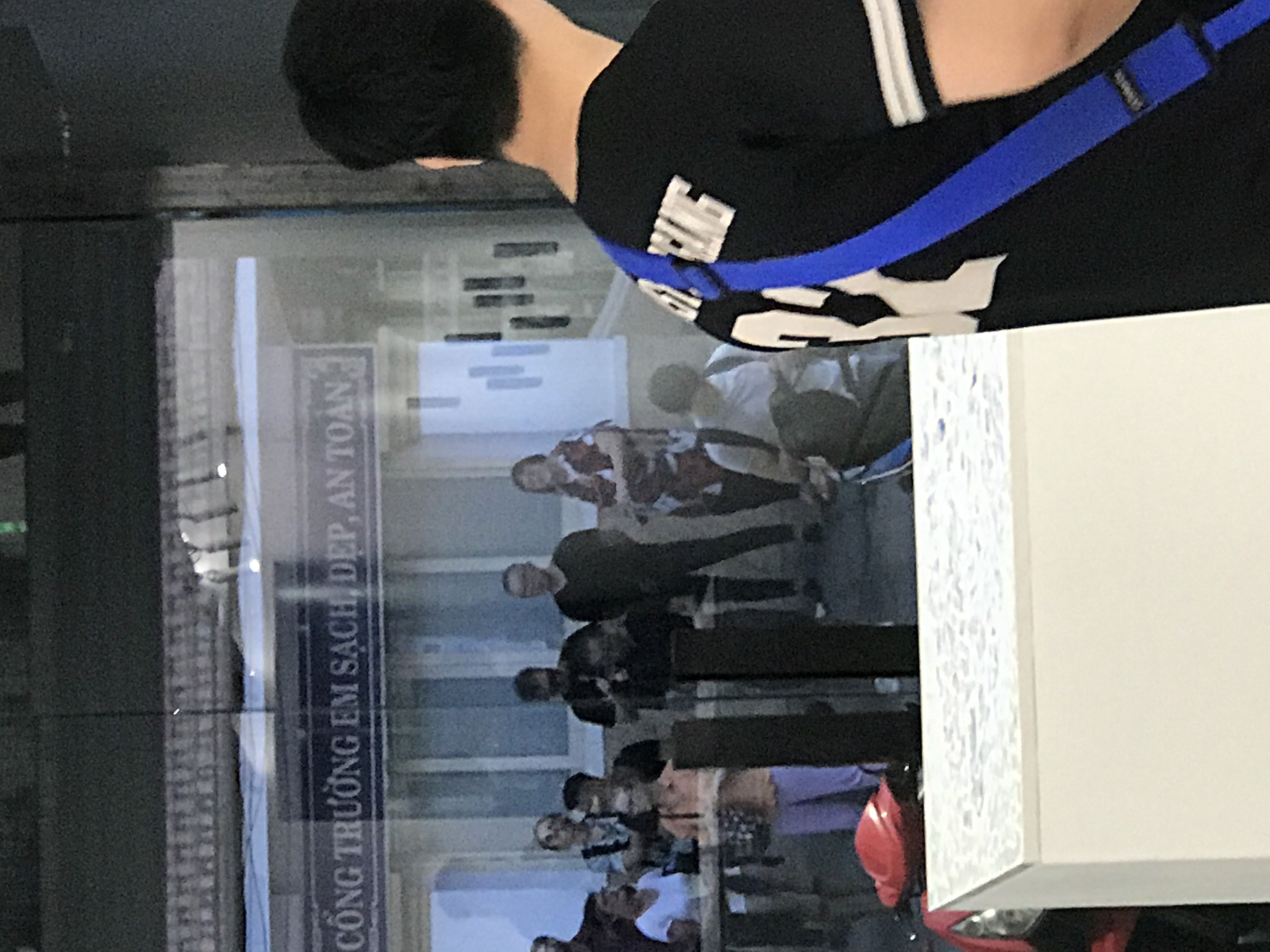
Dismembering Echoes explored the verticality of breaking apart members of a hardcore metal band across different floors within a four-floor gallery. The music introduced physical spatiality, through the need to visit each floor to experience each instrument. Alternatively, the audience could relocate to the street to experience the collective sound.
This dismembered performance revealed several interesting themes. Firstly, I reflected upon the disruption to the existing exhibition within the gallery. I was not part of this exhibition directly as a performer. But instead, I have planned and conceptualized the performance and gallery settings, in which I have placed a hardcore metal band of Saigon to perform their music within specific defined rules, and it acted as an externally generated set of properties that were disrupted by my impact on the ambience of the show and the gallery. This situation places in the foreground the “spatial orientation of the music that goes beyond the spatial characteristics that defines the site specificity of the space” (Klein 2009, 1).
Secondly the role of the sound listening experience and the gallery atmosphere, was this moment of transition between my reference to music and genre, primarily looking at the composition (melody, harmony, structure) to more specifically at noise itself (tone / intensity / randomness) and its spatialization.
SUMMARY
This moment helped me understand listening not as a means of isolating or dissecting sound, but as a relational and creative act—one that moves across time, materials, and meanings. Listening became a way of noticing how things resonate, how they affect one another, how they gather and disperse. It was not about categorizing the sounds I encountered but attuning to how they mattered—how they shaped the atmosphere, the experience, and the sense of presence. This reflection strongly resonated with ideas I later encountered in sonic materialism: that sound has an environmental affect and is entangled with the conditions of its surroundings.
The project revealed that listening, for me, was not only about collecting or documenting sound. It was about surrendering to its uncertainty, allowing it to transform perception. That encounter with Dismembering Echoes, standing at a distance, enveloped by overlapping vibrations, marked a turning point in how I began to define listening as research practice. It was no longer just an act of hearing. It was a way of being with the world.
Dismembering Echoes marked a turning point in how I understood listening—not as a passive act, but as an active, embodied engagement with noise and environment. What I expected to be chaotic or disjointed—due to the building’s hard surfaces and mostly empty spaces that allowed sound to bounce and reverberate freely—turned into a moment of deep attunement between the musicians and the environment. Rather than disrupting the performance, the architecture acted almost like an amplifier. Instead of dulling the sound or creating confusion, it enhanced the experience—it was loud, heavy, and intensely present. The performance revealed that noise is not merely disruptive, but a material that shapes how we experience place. It invited a different kind of listening—immersive, relational, and responsive. From this point forward, listening in my work became a method to let it reveal how bodies, spaces, and atmospheres resonate together.